Why Uploading Videos Directly to Your Website Is a Mistake
When it comes to video, there are different ways to display it on your site — one of which is uploading the video directly to the site. You click the insert video icon and upload the video directly from your computer to your hosting. This method may seem simple and straightforward, but it has so many problems that it cannot really be considered a solution — it's more of an obsolete approach. Here are our reasons.
1. High Traffic and Server Resource Consumption
Imagine a large number of users visiting a page on your site that contains a 100MB video uploaded directly. This will quickly exhaust your monthly traffic allowance. It's not just about traffic — hundreds of simultaneous viewers put heavy load on server resources. On shared hosting, this affects other users and the hosting provider will complain. That's why shared hosting has per-user resource limits for fair resource distribution. You might solve this with a dedicated server, but then when you exceed its resources you'll need to upgrade — which is no simple matter (unless you're on an expensive cloud server).
Kavimo doesn't have these headaches. You buy storage and traffic as you need them. We handle the infrastructure and technical worries; you just upload your videos.
2. Videos Buffering During Playback
Videos uploaded directly to the site don't play smoothly — especially if the user's internet connection is weak. In non-streaming mode, the video must be fully downloaded before playing. This typically causes users to experience multiple playback issues: buffering, black screens, and slow playback.
Kavimo's video hosting service streams videos — meaning when a user requests playback, the entire video isn't downloaded at once. A small few-second segment is downloaded and played, then the next few seconds are fetched. This process happens so quickly that the user doesn't notice anything — it feels like watching a local file.
3. The Chaos of Video Formats
True, most modern browsers support the well-known H.264 encoding format (usually the mp4 format), but for full compatibility across all devices you need to store multiple versions in different formats for different browsers and devices — which increases storage consumption and complicates the upload process. The first challenge is using format conversion software to generate different video versions (many different software options, their settings, different conversion approaches, powerful hardware for fast conversion, and so on). The second challenge is adding the necessary code to your HTML for browsers to use.

Kavimo's player generates all the necessary formats for different devices — so you don't need to worry about whether a given video will play on a given device. We cover all devices and platforms. The rare unsupported cases are probably ancient relics from another era!
4. Playing Only One Quality and Resolution
Some users have fast internet and want to watch in 4K. Others watch on mobile and want 720p or at most 1080p. How would the browser's default player know which quality to serve? This is exactly where video streaming technology and Adaptive Bitrate (ABR) come in — and Kavimo uses this technology in its dedicated player. For example, if you upload a 1080p video, 720p, 480p, and 360p versions are automatically generated.

5. Videos Being Downloaded
And finally, the last and greatest problem with uploading videos directly to WordPress or any CMS is low security. Even if you use open-source players built specifically for streaming, videos can still be easily downloaded using software like IDM (Internet Download Manager). This is a problem for videos that shouldn't be downloaded — such as online film screenings or educational course videos from exam prep institutes.
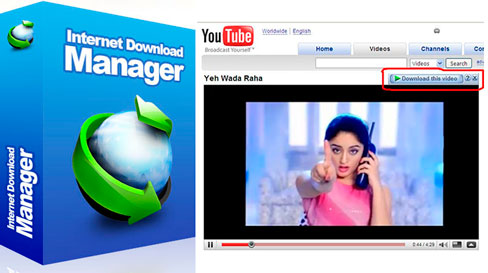
Many of the previous problems can be solved using streaming players like Aparat, but this download problem cannot be solved with Aparat or any other well-known player — and this is one of the most important differences between Kavimo and Aparat and other video sharing services.
Kavimo always offers features beyond existing standards, and its enthusiastic technical team is always looking for new solutions to the problems of the video streaming industry. Kavimo's video hosting service is built to deliver your video content to your users with high speed, security, and ease. What we do is develop infrastructure and solve technical streaming problems. What you do is simply share a video link.