VOD vs. OTT: What Is the Difference?
According to Alexa statistics, Aparat is the most visited website among Iranians after Google — a site with 36 million unique monthly visitors (2019). This means that any video published on Aparat will almost certainly appear at the top of Google search results. That sounds great, but let's look at the other side of the coin. In this article, we explain why using video sharing services hurts your business and why Kavimo, as a dedicated video hosting service, is the only optimal solution available today.
What is the problem?
Many people assume that by placing their video content on video sharing services (like YouTube and Aparat) and riding the wave of views, they will achieve great success — but in practice, something else happens entirely. You do all the hard work of creating the video and sharing the link on social media, and yet the profit flows into the pockets of these platforms. When users search on Google, the version of the video hosted on your own website is ignored, while the version on Aparat or YouTube appears at the top of the results. This means losing a huge volume of traffic.
On top of that, the experience of watching a video on these sharing platforms is deeply unpleasant. A viewer in the middle of watching an educational video — an experience that should feel focused and professional — is suddenly hit with an irrelevant ad that completely breaks the mood. And along the sides of the page, countless unrelated videos compete relentlessly for their attention. The result: you and your users are inconvenienced so that someone else can make money. The primary revenue model of video sharing services is advertising. They are never thinking about your sales, they are not trying to drive traffic to your website, and they have no interest in whether your videos convert into revenue. Their only concern is how to keep users on their platform as long as possible — to show them more videos and more ads. It is exactly like a whirlpool, pulling everything into itself.
What is the solution?
To be honest, the only optimal solution available today is Kavimo. Kavimo is a video hosting service built with the needs and concerns of business owners at its core. It is the only optimal solution because you simply will not find its features in any other service. Below, we highlight a few of them.
1. Videos Cannot Be Downloaded
Before Kavimo, selling educational videos was a serious challenge. As soon as a video was sold, it would rapidly spread across the internet in large volumes, wiping out all the potential revenue from that product. In effect, once you handed over your video content, you lost all control over it, and your income depended entirely on the goodwill of your customers. Kavimo solved this problem once and for all. Videos hosted on Kavimo cannot be downloaded under any circumstances. But we did not stop there — we added an additional security layer available to customers on higher plans. This system is called DRM Text. It works by randomly displaying the viewer's personal information — such as their name and mobile number — at various positions on the screen during video playback. This alone discourages any attempt at screen recording, since the viewer's own name and number are visibly stamped on the content. This information cannot be removed through video editing because it has no fixed position — attempting to do so would destroy the entire content and visual texture of the video.
2. Driving Traffic to Your Website
Video sharing services largely eliminate your chances of attracting a larger audience. These platforms capture all the traffic for themselves and monetize your content freely through advertising. As a result, your website gets overlooked, nobody signs up or makes a purchase, and over time your site turns into an abandoned warehouse — until you eventually start thinking about shutting it down altogether. With Kavimo, however, videos are published under your own dedicated domain, and because these videos are properly SEO-optimized, all incoming traffic is directed straight to your website.
When Kavimo embeds videos, it also injects structured data in JSON-LD format into the page. This data includes all the markup schemas defined on schema.org, and is added specifically to ensure that Google indexes the video correctly. The video description is also included on the video page at load time. This means the page will rank for queries related to that video — queries that typically surface as rich snippet images in Google's video search results, and sometimes in regular search as well. By contrast, embedding Aparat videos gives you some assurance that the video will rank well on Aparat itself — these videos often appear as rich snippets in Google results — but the core problem is that viewers almost never navigate from Aparat to your main website (typically under 1%).
3. No Ads
We have all experienced the intrusive ads that video sharing services push at us. These platforms earn a significant portion of their revenue by displaying ads in the middle or at the end of videos. But does a random ad for a meat grinder appearing in the middle of an educational video not make the whole experience feel unprofessional? Videos hosted on Kavimo are completely free of ads and any other disruptive elements. On Kavimo, every search can become a sale.
4. Player Customization
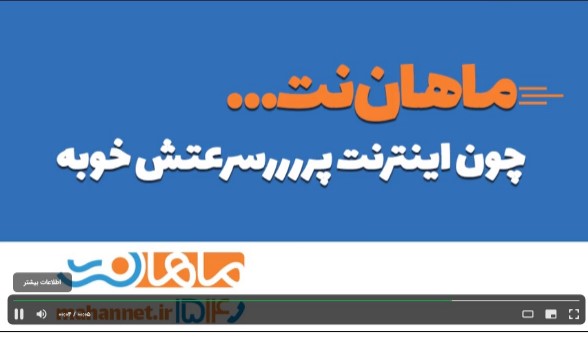
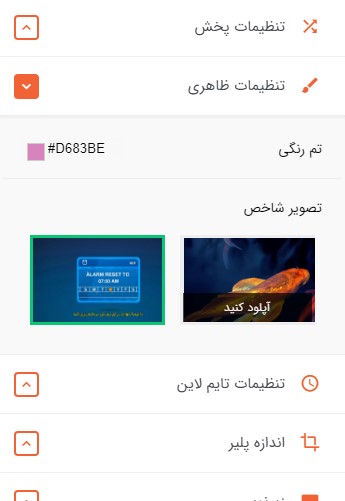
With video sharing services, you have no control over the appearance of the player. You cannot change the player color to match your brand identity, for example, and you cannot hide the timeline — the playback indicator, start and end times, or forward and rewind buttons. With Kavimo, all of this is possible, along with many other options such as autoplay, responsive or fixed player sizing, toggling the download button on or off, and more.
5. Excellent Support
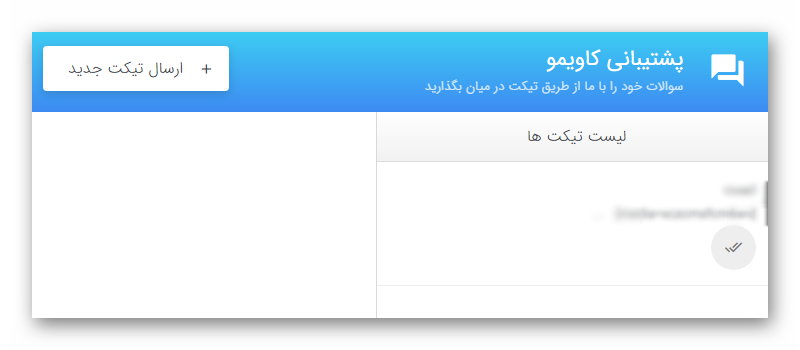
No matter how good an online service is, it is worthless without proper support. In our view, support is the single most important feature of any service, and for that reason we place enormous emphasis on Kavimo's customer support. You can ask questions 24 hours a day, 7 days a week, and receive the best possible answer in the shortest time.
Attractive features such as free traffic for users, API access, video analytics, subtitles, and SLA and NDA certificates — along with much more — are available on the pricing page, where you can discover just how unique Kavimo truly is.
Summary
When the goal is to increase traffic to your website or dedicated platform, Kavimo is the clear answer — because embedding the Aparat player does nothing to grow your site's visitor numbers. The reason is simple: Google always prioritizes the version of a video hosted on an authoritative platform like Aparat or YouTube. Aparat makes sense for businesses where maximizing video view counts matters more than driving traffic to a personal website. For example, a doll designer could share a video of their work on video sharing platforms like Aparat or YouTube to generate effective word-of-mouth marketing and attract more inquiries and customers.
But if that same doll designer sells their products online, driving traffic to their website becomes critically important. That is where Kavimo comes in. The Kavimo player channels all search traffic directly to your site. It looks great and loads faster thanks to smaller files and fewer scripts — which means more clicks. It scales responsively to fit any screen size. Its Google Analytics integration gives you precise insight into how users behave while watching your videos, so you can optimize and refine your content accordingly. Most importantly, if you want to teach others a skill through video, embedding the Kavimo player on your own website lets you put your videos in front of your audience — with payment required for access and no fear of unauthorized downloads.
You can also use Aparat and Kavimo together in a complementary way, though this depends on your business strategy. For instance, you might publish some videos on video sharing platforms to build brand awareness and get your name out there, while hosting the rest of your videos on Kavimo to drive more targeted traffic. Aparat can play a meaningful role as part of your broader business strategy, but when it comes to increasing user engagement and growing your audience, you will need Kavimo's video hosting service.