What Is Adaptive Bitrate Streaming (ABR)?
Some of Kavimo's customers are university entrance exam preparation websites that previously operated in the traditional way and now operate on the web. Running in-person classes has many disadvantages; even setting aside the heavy costs of renting space, utility bills, obtaining licenses, scheduling classes, coordinating with teachers and students, and consumable expenses, two fundamental problems remain: first, the limited class size, and second, the inefficiency of this teaching method (for example, the teacher might be energetic while the student is tired, or vice versa).
Some institutes sell their products as CDs or downloadable files through online stores. While this approach has fewer costs and problems than running classes, it is not without issues. First, sold videos are defenseless against unauthorized copying; second, additional tasks like design, packaging, and postal shipping are added to the sales cycle. Some exam prep institutes display their educational videos online — meaning instead of downloadable files or CDs, they charge users for the right to watch videos on the web. This method is good but has problems. Even setting aside issues like excessive hosting space consumption, server procurement, maintenance and configuration, choosing the right hosting, and website programming, one problem remains: the problem of video downloads!
Kavimo has created a platform for hosting videos so that businesses can offer their education on the web without getting tangled in the technical complexities of streaming and without worrying about video downloads. Below we list the features that we believe are the main reasons why exam prep websites migrate to Kavimo's video hosting service.
No Video Downloads
The bulk of exam prep websites' revenue comes from selling educational videos. Downloading these videos would have serious consequences, including unauthorized copying and free distribution of videos on the internet! After reviewing available solutions, we found that all of them are vulnerable to video downloads; so we built a player that cannot be defeated by any trick to download videos. Many exam prep institutes chose Kavimo precisely for this feature, and in our view it is the most important concern for online education businesses. Kavimo went even further and added another security layer: DRM Text. With this feature, user information is displayed in various parts of the video during playback, so the user won't even think about screen recording!

End of Technical Headaches
Before Kavimo, the only way to deliver online video education was to upload videos directly to hosting or use a dedicated server. Another option was using video hosting services similar to Kavimo, but there are few of them and none are immune to video downloads! Foreign alternatives, though numerous, are either unusable due to sanctions or not cost-effective due to high plan prices. After Kavimo, things changed; now you can upload videos to our secure servers without dealing with technical issues and receive a sharing link. Videos are displayed from your site, but the storage and bandwidth belong to Kavimo's servers. These servers are equipped with the latest world technologies and have high performance and security ratings. Kavimo's servers even have higher technology than some prominent ISPs' servers.
Cost Efficiency
Many video hosting services calculate storage and bandwidth in gigabytes. We calculate based on time (storage based on hours of video content, bandwidth based on minutes of video viewing). For streaming video in different qualities, multiple versions of the video must be created. On existing services or hosting, multiple versions must be stored for each uploaded video; this means if a video is 700 MB, its actual storage consumption becomes several times larger due to storing 360p, 480p, 720p, etc. versions. Kavimo's proprietary technology means only that 700 MB file size is counted for you. Also, since storage is based on video hours, video quality doesn't matter; a 4K video has the same hour count as a 1080p video (a significant difference in gigabytes). Similarly for bandwidth, video viewing minutes are the metric; if users switch between quality levels, it doesn't affect bandwidth consumption.
24/7 Support
Many exam prep websites deal with high volumes of daily visits, which requires strong support. Kavimo provides 24/7 support on all plans, and on the higher-tier VIP support plan, you'll be directly in contact with the technical manager. You won't find this type of support with any other service. We believe a large part of Kavimo's success is due to its strong support, and this is one of the key reasons for Kavimo's superiority among educational institutes.

API Access
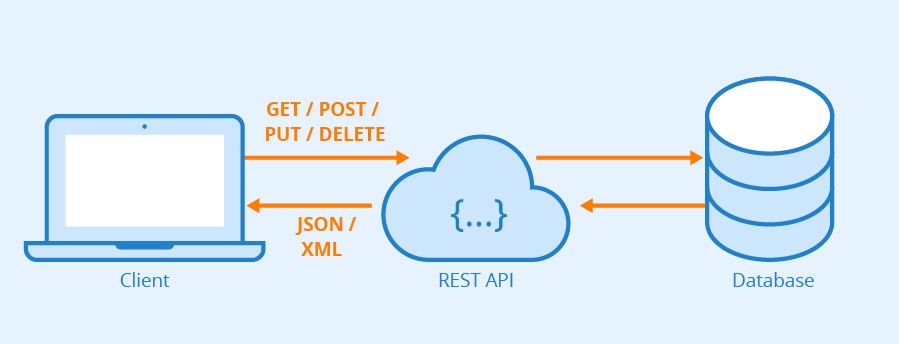
Kavimo doesn't lock its customers into a specific player. You can connect to the API, receive a stream link, and play it in a player of your choice. API access gives you the flexibility to use Kavimo's features according to your needs.
Video Analytics
One of Kavimo's outstanding features is providing accurate video statistics. This data is sent as events to your site's Google Analytics account. You can track user behavior during video viewing in separate categories — for example, what percentage of videos were watched completely or partially. Clicking on each percentage lets you see individual video statistics. This information helps you identify potential issues with your video content and measure improvements after addressing them. These statistics are especially important for educational websites, particularly exam prep sites, as they can analyze user behavior to create better content and thereby earn more revenue.
.png)
Free Traffic
Exam prep websites can get a dedicated IP and cover the bandwidth costs for their users, making their site's video traffic completely free — giving them a competitive edge. A simple announcement saying "traffic on this site is free" can make a significant difference in visit counts.
Service Guarantees
Kavimo offers an unconditional 30-day money-back guarantee plus two additional agreements. In the Service Level Agreement (SLA), Kavimo is obligated to provide its services at high quality — any breach of this agreement is subject to financial compensation, details of which you can read on the SLA page. Also in the Non-Disclosure Agreement (NDA), details of which are on the NDA page, Kavimo commits to confidentiality, protection of trade secrets, and non-disclosure of customer information. Many exam prep institutes care greatly about their video hosting service quality; otherwise they suffer major losses. Kavimo, as a knowledge-based company, has proven the quality of its services not in words but in practice through these two certificates.
You can see more of Kavimo's features on the pricing page (after visiting the page, click the "Show full details" button at the bottom of each plan).